
A Technical Guide for Safe Hygiene in Food, Beverage, Dairy and Process Lines
CIP/SIP systems are one of the most critical components of hygiene standardization in modern food, beverage, dairy, cosmetic, pharmaceutical and process industries. Tanks, pipelines, filling systems, heat exchangers, mixers, filter housings, valve groups and closed production lines must be cleaned properly after each production cycle and disinfected when necessary.
The chemicals used in these systems should not be considered only as “cleaners” or “disinfectants”. The right CIP/SIP chemical must be evaluated in terms of foam behavior, material compatibility, automatic dosing suitability, residue control, organic load tolerance, temperature stability, conductivity monitoring and overall process safety.
Incorrect chemical selection may cause excessive foaming inside the line, insufficient cleaning, surface film formation, microbial risk, corrosion, production loss, residue risk and quality deviations. Therefore, chemical selection in CIP/SIP systems is a strategic decision in the hygiene management of a facility.
1. What Are CIP and SIP?
CIP stands for “Cleaning in Place”, meaning that equipment is cleaned without dismantling. Closed lines, tanks, pipes and process equipment are cleaned under defined conditions of temperature, flow rate, chemical concentration and contact time.
SIP is used as “Sterilization in Place” or, in some applications, “Sanitization in Place”. The aim is to reduce microbial risk after cleaning or to achieve the required level of sterilization/disinfection according to the process requirement.
CIP/SIP applications are widely used in the following areas:
- Milk and dairy product production facilities
- Beverage and filling lines
- Fruit juice, sauce, syrup and liquid food production
- Fermentation tanks and bioprocess lines
- Food additive and flavor production facilities
- Cosmetic and personal care production lines
- Chemical process tanks and closed systems
- Laboratory and pilot production systems
2. Key Criteria That Determine Chemical Selection in CIP/SIP Systems
When selecting a CIP/SIP chemical, evaluating only the active ingredient is not sufficient. The facility’s process structure, line material, product type, organic load, temperature, level of automation and verification requirements must be considered together.
Main criteria to evaluate in chemical selection
- Type of contamination: Oil, protein, sugar, starch, mineral deposits, lime scale, milk stone, colored film, biofilm or microbial risk.
- System material: Stainless steel, plastic seals, EPDM, silicone, PTFE, glass, pump and valve materials.
- Foam behavior: High foam in CIP systems may negatively affect pump and sensor performance.
- Automatic dosing compatibility: The chemical must be compatible with dosing pumps, flow meters, conductivity sensors and automation systems.
- Temperature compatibility: Some products are more suitable for hot applications, while others perform better at cold or ambient temperatures.
- Ease of rinsing: The chemical should be easily removed from the system after cleaning.
- Residue control: Chemical residue risk should be controlled on food contact surfaces and closed process lines.
- Occupational safety: Storage, handling, dosing and personnel safety must be considered.
If these criteria are not considered, the cleaning process may appear complete but may still be insufficient in terms of process safety.
3. Why Is Foam Control Critical in CIP/SIP Systems?
In CIP/SIP systems, foam is often undesirable. Although foam may give a visual impression of cleaning in manual applications, excessive foam in closed systems can make process control difficult.
Problems caused by excessive foam
- Pump cavitation or reduced pump efficiency
- Flow and pressure fluctuations
- Incorrect tank level detection
- Unstable conductivity and sensor readings
- Reduced homogeneous contact of the chemical with the surface
- Longer rinsing time
- Overflow or operational control loss in the CIP return tank
For this reason, products used in CIP/SIP lines should preferably have a controlled foam profile. Low-foaming or non-foaming products are more suitable for automatic dosing and closed-loop cleaning systems.
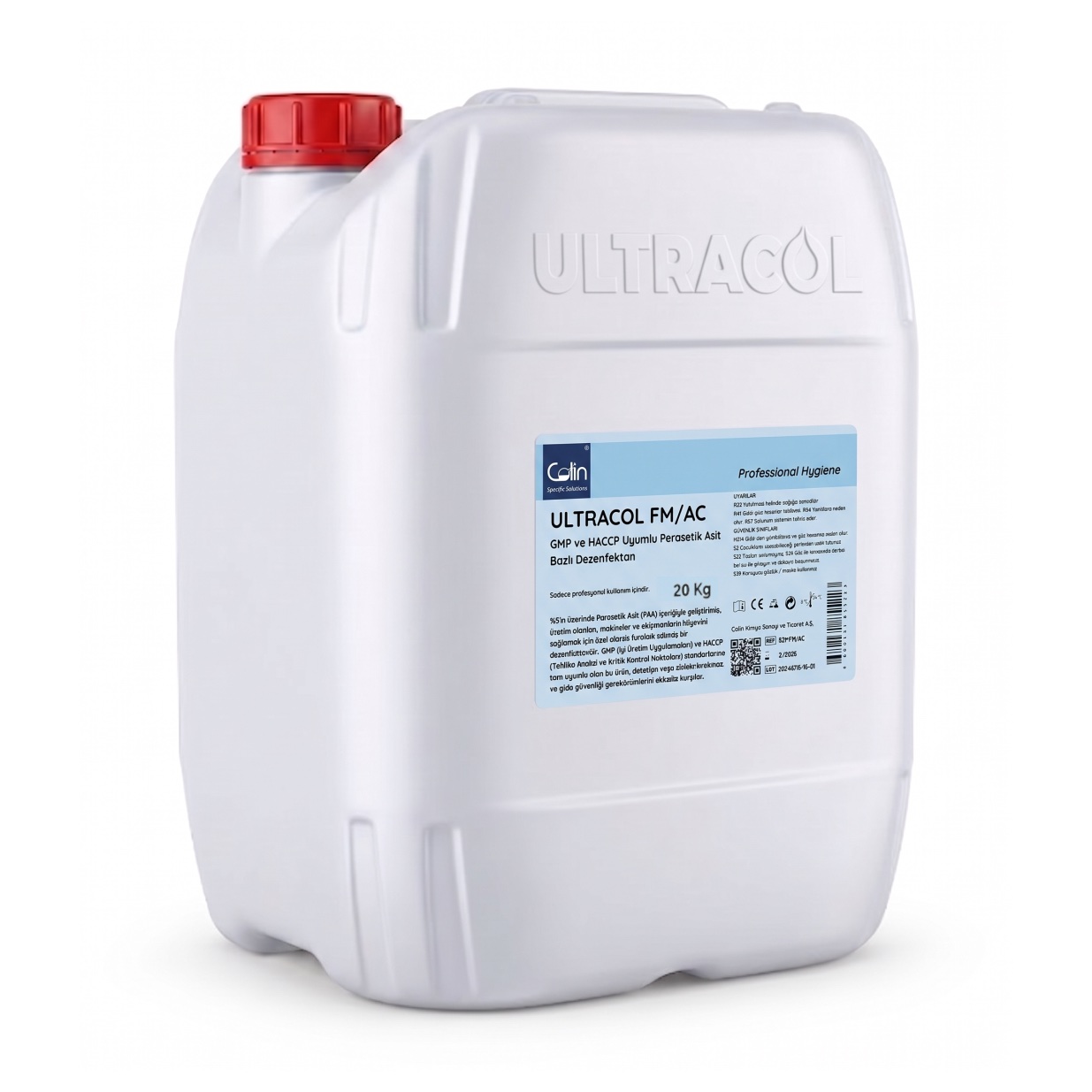
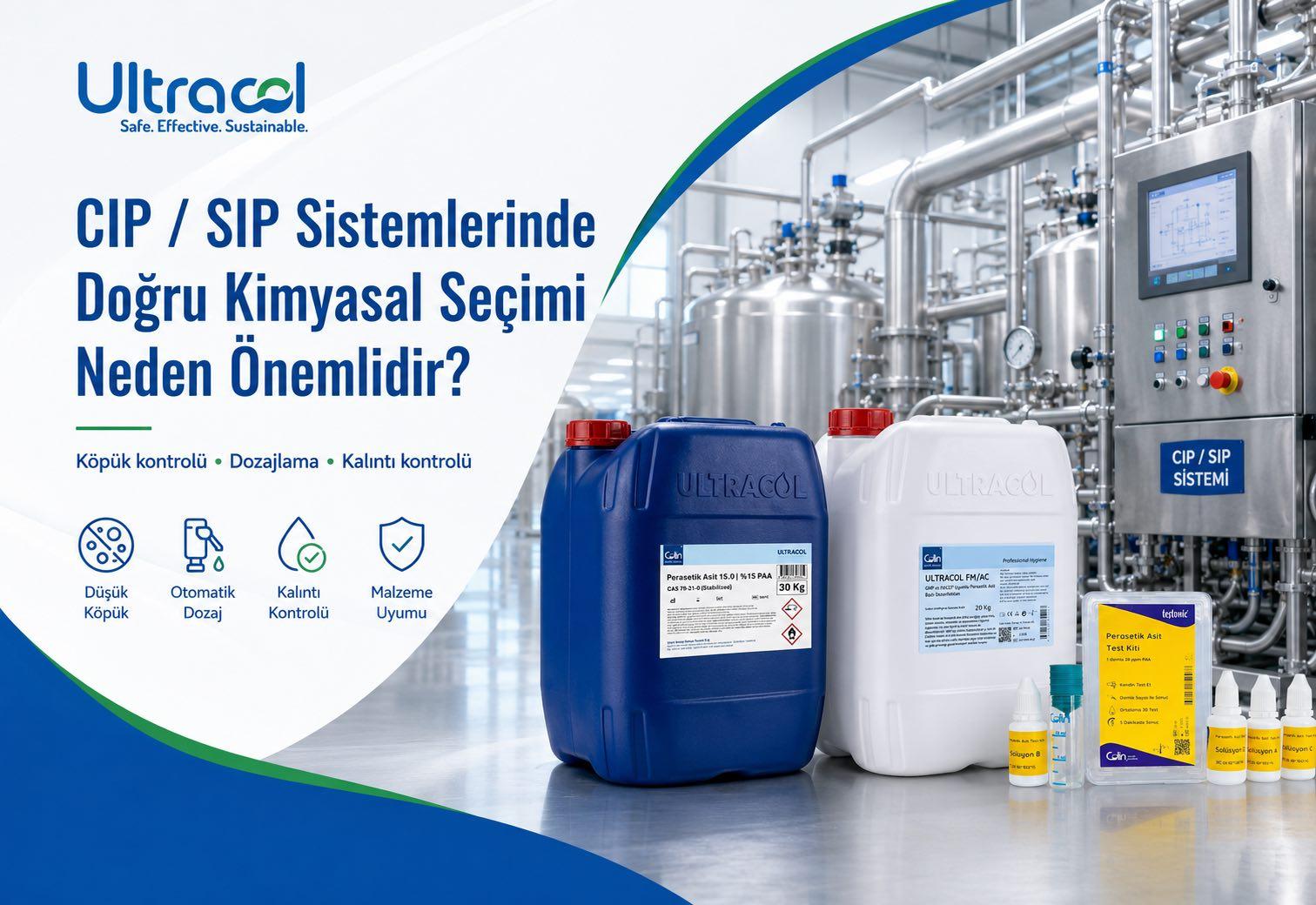
One of the products that may be considered for food process hygiene and CIP/SIP applications is ULTRACOL FM/AC – GMP and HACCP Compatible Peracetic Acid-Based Washing Agent. A peracetic acid-based hygiene approach provides strong oxidative action and controlled application advantages, especially in closed systems.
4. General Stages of a CIP/SIP Procedure
Each facility’s CIP/SIP procedure may vary depending on the product being processed and the equipment design. However, a typical CIP/SIP cycle generally consists of the following main stages.
Typical CIP/SIP process sequence
- Pre-rinse: Coarse product residues and water-soluble soils are removed from the line.
- Alkaline cleaning: The aim is to remove oil, protein and organic residues.
- Intermediate rinse: The alkaline chemical is removed from the system.
- Acidic cleaning: Mineral deposits, lime scale, milk stone or inorganic residues are removed.
- Final rinse: Chemical residues are removed from the system.
- Disinfection or sanitization: A suitable disinfectant is applied to reduce microbial risk.
- Residue / active ingredient control: When necessary, pH, conductivity, PAA, hypochlorite or peroxide control is performed.
This sequence may vary depending on the facility. In some lines, alkaline cleaning and disinfection may be sufficient, while in dairy processes, high mineral load systems or facilities using hard water, the acidic cleaning step becomes more critical.
5. CIP/SIP Chemical Approach According to Contamination Type
| Contamination / Risk Type | General Chemical Approach | Parameter to Check | Product Group to Consider |
|---|---|---|---|
| Oil and protein residues | Alkaline cleaning | pH, conductivity, visual cleanliness, rinsing | Alkaline cleaning products / process detergents |
| Lime scale, minerals, milk stone | Acidic cleaning | pH, surface brightness, mineral film | Acidic cleaning products |
| Microbial risk | Oxidative disinfection | Active ingredient, contact time, rinsing | ULTRACOL FM/AC, Peracetic Acid 5.0, Peracetic Acid 10.0, Peracetic Acid 15.0 |
| Hypochlorite-compatible surface disinfection | Hypochlorite-based disinfection | Active chlorine, surface compatibility, rinsing | ULTRACOL FM/AL |
| Chemical residue risk | Residue verification | PAA, H2O2, hypochlorite, pH | Peracetic Acid Test Kit, Peracetic and Hydrogen Peroxide Percentage Test Kit, Hypochlorite Residue Test Kit |
6. Why Do Peracetic Acid-Based Products Stand Out in CIP/SIP Systems?
Peracetic acid is one of the strong oxidative actives frequently preferred in food and process hygiene applications. When appropriate concentration, contact time and process conditions are provided, it contributes to hygiene management in closed lines, tanks, filling systems and food contact surfaces.
Advantages of peracetic acid-based products in professional applications
- Provides a broad-spectrum oxidative hygiene approach.
- Can be evaluated for CIP/SIP systems and automatic dosing applications.
- May provide advantages in closed-loop systems where foam control is important.
- Active ingredient control can be monitored using test kits after application.
- Can be considered for professional use in food, beverage, filling and process hygiene.
For peracetic acid-based products, the correct dosage should be determined according to the facility’s product type, organic load, temperature conditions, contact time and surface material. Since these products have a strong oxidative character, application procedures and occupational safety rules must be followed carefully.
PAA products that may be considered for CIP/SIP and process hygiene
- Peracetic Acid 2000 | Ready to Use: May be considered for applications requiring a practical lower active ingredient level.
- Peracetic Acid 2.0 | 2% PAA: May be preferred for professional applications requiring a low-to-medium concentration peracetic acid approach.
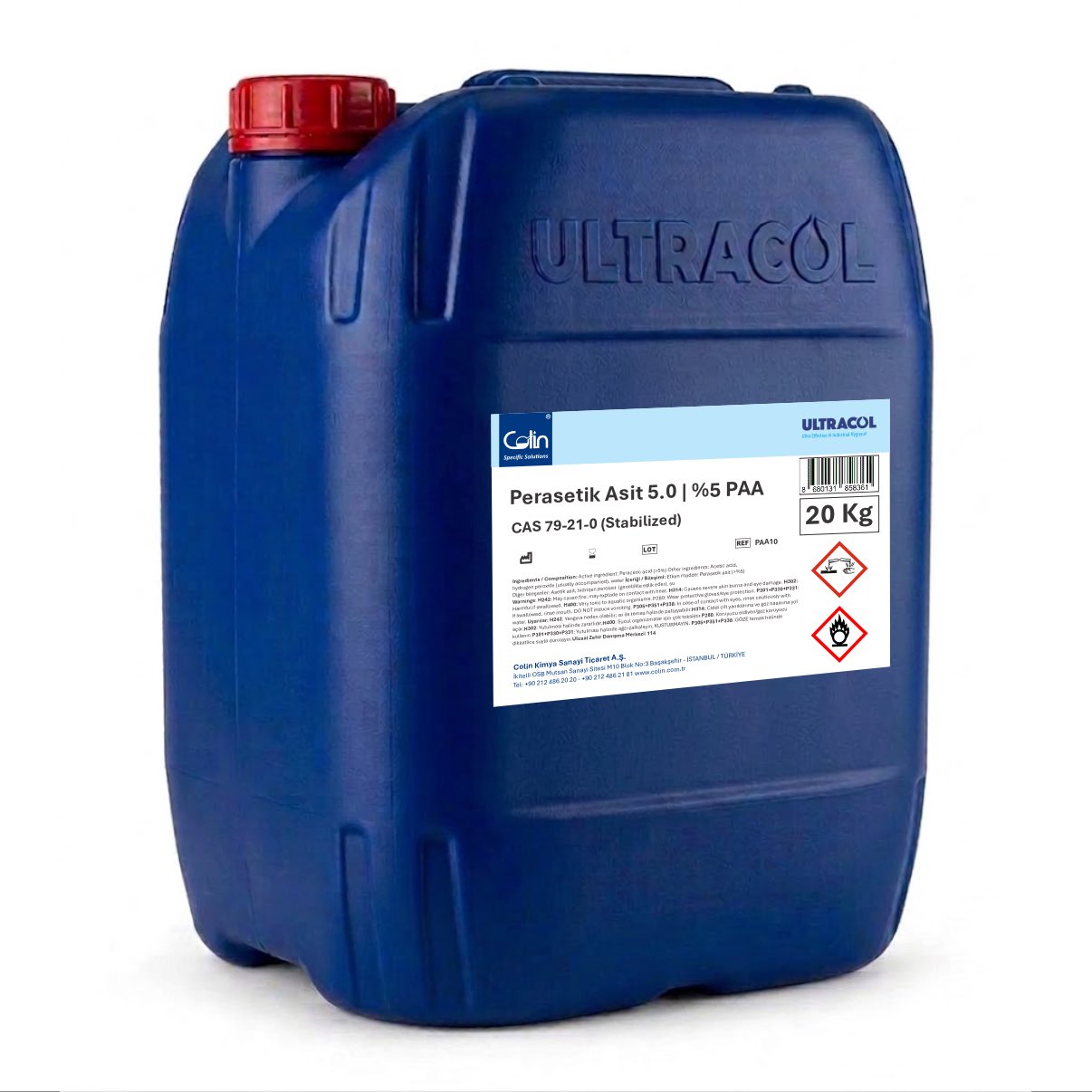
- Peracetic Acid 5.0 | 5% PAA: May be considered for facilities requiring a more concentrated PAA solution in food and process hygiene applications.
- Peracetic Acid 10.0 | 10% PAA: May be considered as a concentration option suitable for automatic dosing and industrial process applications.
- Peracetic Acid 15.0 | 15% PAA: May be preferred in professional and industrial applications requiring higher concentration PAA.
- ULTRACOL FM/AC – GMP and HACCP Compatible Peracetic Acid-Based Washing Agent: A professional peracetic acid-based product that may be considered for food process hygiene, surface applications and CIP/SIP systems.
7. Chemical Selection in Automatic Dosing Systems
Automatic dosing in CIP/SIP systems provides a significant advantage for hygiene standardization. However, for automatic dosing systems to work reliably, the physical and chemical properties of the chemical must be compatible with the system.
Key points to consider for automatic dosing
- The product viscosity should be suitable for the dosing pump.
- The foaming tendency of the product should be low or controllable.
- The chemical concentration should be regularly monitorable.
- The process should be controllable through conductivity, pH or active ingredient measurement.
- The dosing line, seals, pump and connection materials must be compatible with the chemical.
- The product should not create sediment or clogging risks in the closed system.
In automatic dosing systems, product concentration should not be left to manual estimation. Dosing pump adjustment, initial validation and a periodic control plan should be established according to facility conditions.
8. Material Compatibility: Stainless Steel, Seals and Plastic Components
In CIP/SIP systems, not only the cleaning performance of the chemical but also its compatibility with system materials is important. In closed lines, the chemical comes into contact not only with stainless steel surfaces but also with seals, valves, pumps, level sensors, plastic connection parts and measuring equipment.
Points to evaluate in material compatibility
- Risk of dulling, staining or corrosion on stainless steel surfaces
- Compatibility with sealing materials such as EPDM, silicone and PTFE
- Chemical resistance of pump diaphragms and hose materials
- Compatibility with equipment such as level sensors, conductivity probes and pH electrodes
- The combined effect of temperature and chemical concentration
- Risks that may occur on surfaces or seals during prolonged contact
Especially for high-concentration oxidative products, contact time, temperature and rinsing steps must be managed carefully. Product selection should consider the equipment manufacturer’s recommendations, existing line materials and previous application experience.
9. Residue Control: Verification of Safe Results in CIP/SIP Systems
After cleaning and disinfection in CIP/SIP systems, one of the most critical issues is verifying whether chemical residues remain in the system. Residue control is important for quality assurance, especially on food contact surfaces, filling lines and closed process systems.
Points where residue control is recommended
- CIP final rinse outlet water
- Tank bottom point and discharge line
- Filling nozzle outlet
- Heat exchanger outlet
- Filter housing and valve groups
- Process line outlet before first production
Parameters that can be checked
- pH
- Conductivity
- Peracetic acid active ingredient level
- Presence of hydrogen peroxide
- Hypochlorite / active chlorine residue
- Visual clarity, odor and foam
Products that may be considered for residue and active ingredient control
- Peracetic Acid Test Kit: May be considered for peracetic acid active ingredient control in CIP/SIP applications.
- Peracetic Acid Percentage Test Kit: May be used for checking concentrated PAA solutions.
- Peracetic and Hydrogen Peroxide Percentage Test Kit: May be considered for systems containing PAA and hydrogen peroxide.
- Hypochlorite Residue Test Kit: May be used for residue control in hypochlorite-based disinfection applications.
Residue control is valuable not only for safety but also for process standardization. Dosage, contact time and rinsing efficiency can be monitored more reliably through these controls.
10. When Can Hypochlorite-Based Products Be Considered in CIP/SIP Systems?
Hypochlorite-based products can provide a strong disinfection approach when used on suitable surfaces and within an appropriate procedure. However, in hypochlorite-based applications, surface compatibility, corrosion risk, organic load effect, active chlorine control and rinsing procedures must be carefully managed.
Therefore, hypochlorite-based products should not automatically be considered suitable for every CIP/SIP line. Stainless steel grade, contact time, temperature, pH and product concentration must be managed correctly.
- ULTRACOL FM/AL – GMP and HACCP Compatible Hypochlorite-Based Disinfectant: May be considered in food process and surface applications where a hypochlorite-based disinfection approach is suitable.
After hypochlorite applications, the residue risk should be carefully evaluated, especially on food contact surfaces and process lines. When necessary, control may be performed using the Hypochlorite Residue Test Kit.
11. Common Mistakes in CIP/SIP Applications
Even if CIP/SIP systems operate automatically, cleaning performance may decrease due to incorrect product selection or an improper procedure. The following mistakes are commonly observed in facilities.
- Trying to clean the entire line with a single product without considering contamination type
- Using foaming products uncontrollably in closed CIP systems
- Performing insufficient pre-rinsing
- Not rinsing adequately between alkaline and acidic steps
- Applying disinfectant while the organic load is still high
- Not checking dosing pump calibration
- Not recording contact time and temperature
- Not performing residue control after final rinsing
- Not evaluating seal and plastic component compatibility
- Ignoring foam, color, odor and conductivity changes in the CIP return water
To prevent these mistakes, the CIP/SIP procedure should be documented in every facility, chemicals should be defined product by product, and control steps should be recorded.
12. Sample CIP/SIP Control Table
| Stage | Purpose | Control Parameter | Risk |
|---|---|---|---|
| Pre-rinse | Remove coarse product residues | Visual clarity, temperature, flow rate | If organic load remains, chemical performance may decrease |
| Alkaline cleaning | Dissolve oil and protein residues | pH, conductivity, temperature, time | Insufficient cleaning and film formation |
| Intermediate rinse | Remove alkaline residue | pH, conductivity | Neutralization and performance loss in acidic step |
| Acidic cleaning | Remove lime scale, minerals and milk stone | pH, conductivity, surface appearance | Mineral film and surface dullness |
| Final rinse | Reduce chemical residues | pH, conductivity, clarity | Residue risk on food contact surfaces |
| Disinfection | Reduce microbial risk | Active ingredient, contact time | Insufficient disinfection or excessive chemical use |
| Residue control | Verify safe restart | PAA, H2O2, hypochlorite, pH | Risk of starting production with chemical residue |
13. Which Product Is More Suitable for Which CIP/SIP Requirement?
| Requirement | Product / Product Group | Evaluation Note |
|---|---|---|
| Food process hygiene and PAA-based disinfection | ULTRACOL FM/AC | May be considered for a professional peracetic acid-based hygiene approach. |
| Hypochlorite-based surface / process disinfection | ULTRACOL FM/AL | Surface compatibility and rinsing procedure should be considered. |
| Low-to-medium PAA concentration | Peracetic Acid 2.0 | 2% PAA | May be considered for controlled dosing in professional applications. |
| Medium concentration PAA application | Peracetic Acid 5.0 | 5% PAA | May be considered for process hygiene and oxidative disinfection applications. |
| High concentration PAA application | Peracetic Acid 10.0 | 10% PAA | Should be used with a suitable procedure for automatic dosing or industrial applications. |
| Concentrated PAA requirement | Peracetic Acid 15.0 | 15% PAA | Should be evaluated in professional facilities with proper dosing, contact time and safety procedures. |
| PAA active ingredient control | Peracetic Acid Test Kit | May be considered for checking the active ingredient level of the application solution. |
| PAA and H2O2 control | Peracetic and Hydrogen Peroxide Percentage Test Kit | May be used for checking systems containing peracetic acid and hydrogen peroxide. |
14. Practical Recommendations for Safe CIP/SIP Applications
- Select chemicals according to product type and contamination characteristics.
- Always evaluate foam behavior.
- Check automatic dosing pumps periodically.
- Record temperature, time, pH and conductivity values in each CIP/SIP cycle.
- Perform active ingredient control for oxidative products such as peracetic acid or hypochlorite.
- Do not neglect rinsing and residue control on food contact surfaces.
- Check the compatibility of seals, valves, pumps and sensor materials with the chemical.
- Take control samples from critical line outlets before the first production.
- Do not mix chemical products, and follow the manufacturer’s usage recommendations for each product.
Conclusion: Success in CIP/SIP Systems Depends on the Right Chemical and a Controlled Procedure
Hygiene success in CIP/SIP systems cannot be achieved simply by using a strong chemical. The correct product must be selected according to the right contamination type, surface material, dosing system and verification procedure.
Foam control, automatic dosing compatibility, material resistance, residue control and active ingredient verification are essential components of professional CIP/SIP management. These steps should be systematically applied, especially in food, beverage, dairy and filling lines where process safety is critical.
Colin Kimya’s ULTRACOL and Testonic product groups offer professional solutions for different CIP/SIP needs, including peracetic acid-based process hygiene, hypochlorite-based disinfection, food contact surface cleaning and active ingredient / residue control.
The right chemical selection not only improves cleaning performance but also contributes significantly to production safety, quality standardization, equipment lifetime and operational efficiency.