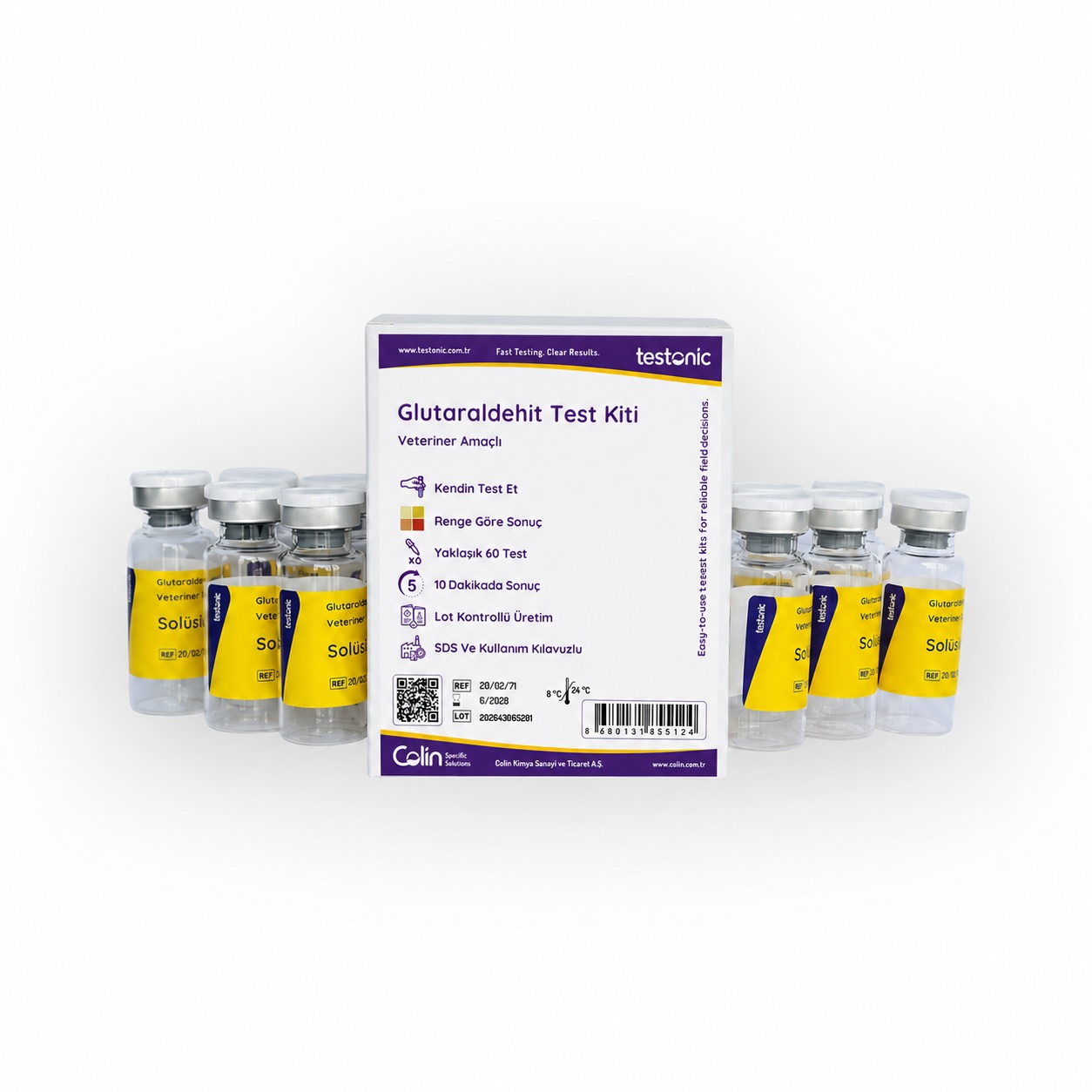


1. Introduction: Why Glutaraldehyde Testing?
Early diagnosis of inflammatory diseases in veterinary clinical practice is critically important for determining treatment strategies and predicting prognosis. The Glutaraldehyde Test is a fast, economical, and practical method that can indirectly measure the level of acute phase proteins, which reflect the inflammatory response, especially in cattle. The test is based on the clotting time that glutaraldehyde forms with proteins such as fibrinogen and gamma-globulin in the blood sample. This provides quick information about the presence and severity of inflammation. 2. Test Principle and Scientific Basis
The 25% glutaraldehyde in the test solution forms covalent cross-links with proteins such as fibrinogen and gamma-globulin in the plasma, creating a gel-like coagulation. The time it takes for this reaction to occur is directly related to the concentration of acute phase proteins in the blood.
-
Clotting in 0–5 minutes: Severe inflammation
-
Clotting in 6–10 minutes: Moderate inflammation
-
Clotting in 11–15 minutes: Mild inflammation
-
>15 minutes / no clot: Negative Result (non-inflammatory)
This test provides a non-quantitative but objective and reproducible idea of the severity and presence of inflammation based on the acute phase response.
3. Clinical Benefits and Target Diseases
3.1. Early Diagnosis Tool
-
Can detect an inflammatory process in the subclinical or asymptomatic period.
-
Provides the first biochemical signs of the presence of infection.
3.2. Target Diseases
-
Pericarditis traumaticus
-
Reticulo-peritonitis (RPT)
-
Mastitis
-
Metritis
-
Pneumonia and Bronchopneumonias
-
Enteritis, colibacillosis, salmonellosis
-
Septic arthritis associated with lameness
-
Post-operative infection follow-up
-
Inflammation control after traumatic tissue injury
3.3. Monitoring Treatment Response
-
You can monitor whether inflammation decreases after treatment by observing the clot formation time.
-
Persistent clotting is an indicator of an ongoing inflammatory process.
4. Practical Usage Advantages
-
Suitable for field conditions: No electricity or equipment required.
-
Fast: Results within 15 minutes can be obtained.
-
It is economical: Much lower cost compared to laboratory test costs.
-
It is customized: Buffer and concentration structure prepared according to ruminant physiology.
5. Use as a Clinical Decision Support System
The veterinarian, the test result;
-
To decide on antibiotic administration
-
To determine the need for surgical intervention
-
To monitor the healing process
-
To decide whether to discontinue treatment
-
To evaluate the systemic effects of inflammation in complex cases
can be used for this purpose.
6. Conclusion
The Gluteraldehyde Test Kit is a valuable aid for the rapid and reliable detection of inflammation in veterinary clinical practice. Screening for non-specific infectious diseases, especially in cattle, is a critical tool for monitoring treatment effectiveness and preventing complications. The Gluteraldehyde Test is an important clinical ally for making the right decision at the right time.