


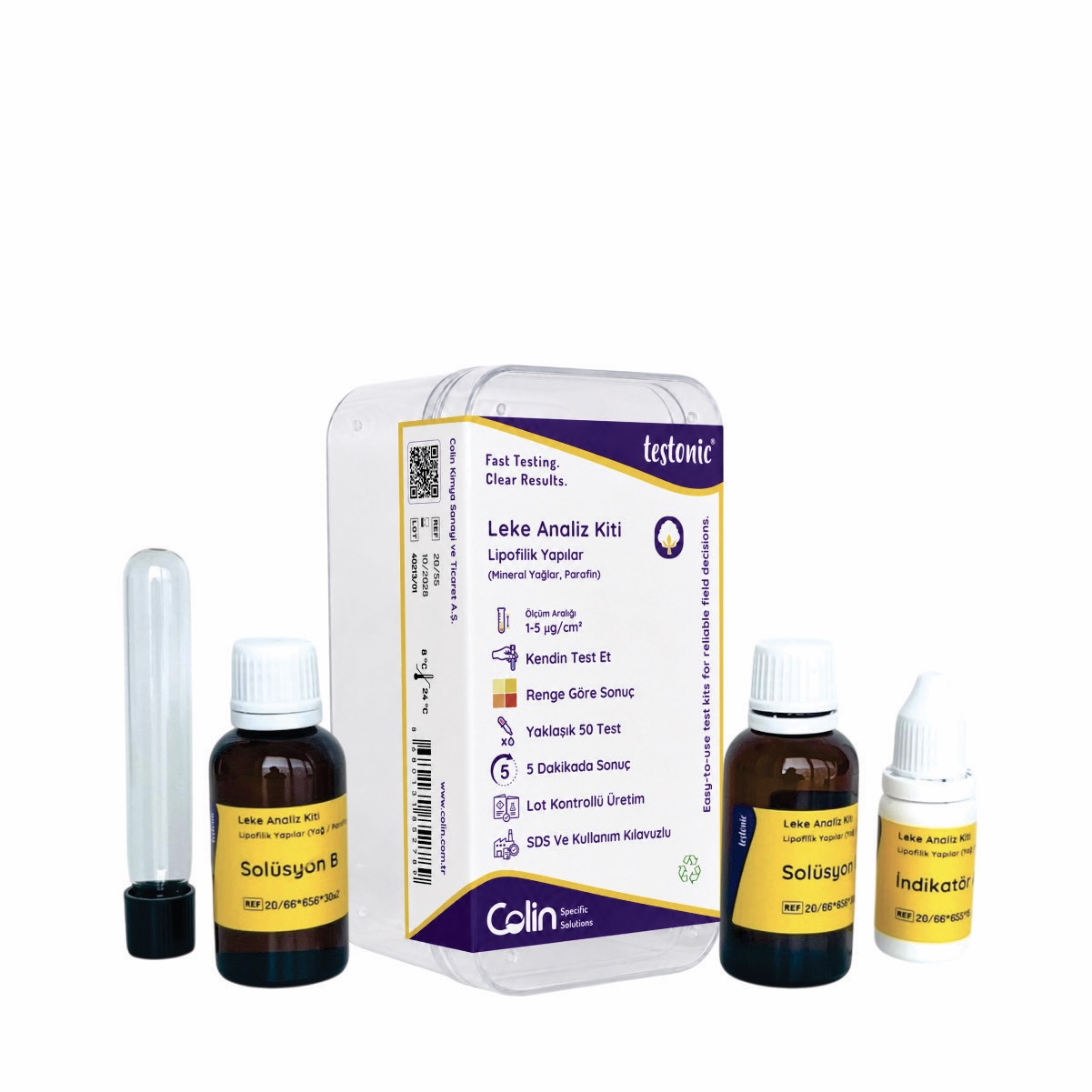
Testonic Stain Analysis Kit – Lipophilic Structures (Oil / Paraffin) is designed to rapidly determine whether stains observed on fabric or yarn are associated with mineral oil, paraffin, machine oil, textile lubricants or similar lipophilic substances.
It can be used from greige-fabric inspection and pre-scouring checks to post-dyeing defect analysis and customer-complaint investigations. Early identification of an oil/paraffin-related stain helps the mill focus directly on the relevant process source and select the appropriate cleaning, reprocessing or corrective action.
Why Is Early Identification of Oil and Paraffin Stains Important?
In textile processing, an oil-related stain is more than a visual quality defect. Hydrophobic residues on the fabric can affect wettability, scouring efficiency, liquor penetration and local dye uptake.
The same contamination may appear as a visible oily mark on greige or light-coloured fabric and later become evident as local poor dye uptake, shade variation, uneven appearance or recurring stain defects.
Rapid identification of the lipophilic character of the stain allows production and quality teams to move directly toward the likely oil source instead of relying on repeated trial-and-error cleaning or reprocessing.
What Does a Positive Result Tell the Mill?
A red-orange colour in the test indicates the presence of mineral oil, paraffin or similar lipophilic material in the problem area. This immediately directs root-cause investigation toward oil- and lubricant-related process points.
| Likely Source | Where to Investigate |
|---|---|
| Machine oil / mineral oil | Lubrication points, leaks and fabric-contact parts on knitting, weaving, winding and handling equipment. |
| Yarn / knitting oil | Lubricant dosage, yarn-lot changes and transfer of process oils from yarn to fabric. |
| Paraffin / wax | Yarn preparation, friction-reduction applications and possible transfer points onto the fabric. |
| Residual oil after pretreatment | Scouring recipe, surfactant selection, temperature, process time, washing and rinsing efficiency. |
Which Decisions Can Be Made from the Result?
A Practical Textile Stain-Analysis Approach
This approach helps quality and production teams focus on the most relevant process stage instead of reviewing the entire production route whenever a stain defect occurs.
Which Stain Analysis Kit Should I Choose?
Textile stains with similar visual appearance may originate from different chemical structures. The Testonic Stain Analysis series helps direct the investigation toward the relevant stain source.
| Suspected Stain Source | Recommended Testonic Test |
|---|---|
| Mineral oil, machine oil, paraffin, yarn/knitting oil and lubricants | Stain Analysis Kit – Lipophilic Structures |
| PVA, PVAc, CMC, acrylate and similar polymers | Stain Analysis Kit – Polymeric Structures |
| Silicone oil, silicone finishes and silicone-based polymers | Stain Analysis Kit – Silicone-Based Polymeric Structures |
Frequently Asked Questions
Test and Process Control Kits for Textile Finishing and Dyeing Mills
Classifies oil, paraffin and hydrophobic stain sources on fabric, supporting stain-removal strategy and process root-cause analysis.
Testonic® Dyehouse Control Pack
Used to distinguish stains caused by oils, paraffin and similar lipophilic structures. Supports correct cleaning or reprocessing decisions in post-dyeing stain problems.
Technical Documents
Related Posts
The Hidden Cause of Post-Dyeing Stains and Shade Differences: Polymer Residues
Related News
Technical Support and Product Consulting
You can use the form to find the most suitable chemical solution for your needs or to obtain detailed information about the technical specifications of our products.
Your requests are carefully reviewed and answered by Colin's expert team.
You can ask us about the product.


