


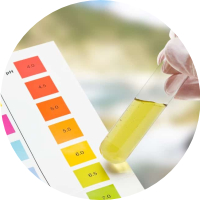
Testonic® RO System Test Kit is designed for easy monitoring of water quality and pretreatment performance in reverse osmosis (RO) systems. Combining total hardness, total chlorine, iron, silica, and pH testing in one set, it helps monitor water parameters that may affect RO membranes.
Using simple color comparison and drop titration methods, the kit provides practical results without electronic measuring instruments. It is ideal for on-site checks during RO system installation, maintenance, filter replacement, and troubleshooting.
RO System Testing in 3 Simple Steps
- Collect a water sample from the feed water, filter outlet, or designated RO system sampling point.
- Apply the appropriate test solutions according to the instructions for the selected parameter.
- Determine the result using the reference color chart or drop count.
Who Can Use It?
RO service technicians, water treatment professionals, industrial water treatment facilities, hospital and laboratory maintenance teams, food processing facilities, and operators responsible for RO system maintenance.
Package Contents
- Total hardness test solutions
- Total chlorine test solutions and color chart
- Iron test solutions and color chart
- Silica test solutions and color chart
- pH indicator and color chart
- Test tubes, application accessories, and instructions for use
Note: This kit is intended for routine RO system monitoring and preliminary assessment. It does not replace other process measurements required for a complete membrane performance evaluation.
RO System Test Kit – 5-Parameter Membrane and Pretreatment Monitoring
Testonic® RO System Test Kit is a multiparameter testing set designed to monitor water quality and key parameters affecting reverse osmosis systems. It combines total hardness, total chlorine, iron, silica, and pH testing in one kit.
Suitable for raw water, pretreatment, membrane feed, and product water monitoring points, the kit provides practical on-site checks using color comparison and drop titration methods without electronic measuring instruments.
Five Essential Water Tests
1. Total Hardness Test
Determines total hardness associated with calcium and magnesium ions. It is particularly useful for monitoring hardness breakthrough at the outlet of water softening systems.
Method: Color-change drop titration
Monitoring purpose: Softener performance and membrane scaling risk
2. Total Chlorine Test
Measures the combined amount of free and combined chlorine in water. It is used to monitor the chlorine and chloramine removal performance of activated carbon filters.
Method: Visual color chart comparison
Monitoring purpose: Oxidative damage risk in polyamide RO membranes
3. Iron Test
Determines iron measurable by the test method that may originate from source water, piping, or filtration systems. Iron deposits can contribute to membrane fouling and reduced water production capacity.
Method: Visual color chart comparison
Monitoring purpose: Iron-related fouling risk in feed water
4. Silica Test
Measures reactive silica (SiO₂) in water. Silica can form difficult-to-remove membrane deposits, particularly in high-recovery RO systems.
Method: Colorimetric comparison
Monitoring purpose: Silica scaling risk in feed and concentrate water
5. pH Test
Indicates whether water is acidic, neutral, or alkaline. pH is important for evaluating mineral precipitation, chemical dosing, and membrane operating conditions.
Method: Visual color chart comparison
Monitoring purpose: pH changes in feed water and suitable monitoring points
Analytical Principle
The kit uses parameter-specific chemical color reactions and drop titration methods.
- Total hardness: The number of drops required to reach the titration endpoint is evaluated.
- Total chlorine: The color reaction corresponding to free and combined chlorine is evaluated.
- Iron: The developed color is compared with a reference chart.
- Silica: The color reaction produced by reactive silica is evaluated using a reference chart.
- pH: The indicator color changes according to the sample pH.
Why Are These Parameters Important in RO Systems?
| Parameter | Potential Impact on RO Systems |
|---|---|
| Total Hardness | Mineral precipitation, membrane scaling, and reduced water production |
| Total Chlorine | Oxidative damage to polyamide membranes and loss of separation performance |
| Iron | Membrane fouling, deposits, and reduced water flow |
| Silica | Formation of difficult-to-remove silica deposits |
| pH | Effects on scaling tendency, chemical dosing, and membrane operating conditions |
Applications
- RO system installation and technical services
- Industrial water treatment facilities
- Food and beverage processing plants
- Hospital and laboratory technical water systems
- Cosmetic and chemical production facilities
- Hotels and centralized water treatment systems
- Routine maintenance and membrane pretreatment monitoring
Testing in 3 Steps
Collect water from the feed line, filter outlet, or designated RO system sampling point.
Add the appropriate testing solutions in the quantities and order specified in the instructions.
Compare the color with the reference chart or determine the result from the titration drop count.
Technical Specifications
| Parameter | Method | Result Reading |
|---|---|---|
| Total Hardness | Drop titration | Color change and drop count |
| Total Chlorine | Colorimetric | Color chart |
| Iron | Colorimetric | Color chart |
| Silica | Colorimetric | Color chart |
| pH | Colorimetric | Color chart |
Measurement ranges: The measurement range and result interpretation procedure for each parameter are specified in the corresponding reference chart and instructions for use.
RO System Monitoring Points
| Sampling Point | Main Monitoring Purpose |
|---|---|
| Raw Water Inlet | Establishing baseline water quality |
| Activated Carbon Outlet | Monitoring total chlorine and chloramine breakthrough |
| Water Softener Outlet | Checking hardness removal performance |
| Membrane Feed Water | Monitoring water parameters affecting membrane performance |
| RO Product Water | Checking suitable parameters within their measurement ranges |
| RO Concentrate Water | Evaluating mineral concentration and silica scaling risk |
Result Interpretation
Results should be compared across relevant sampling points to evaluate the condition of the RO system. Unexpected hardness or total chlorine after pretreatment may indicate the need to inspect the corresponding filtration unit.
- Hardness detected: Evaluate softener performance and scaling risk.
- Total chlorine detected: Check activated carbon filtration and membrane manufacturer chlorine limits.
- Iron detected: Assess feed water quality and pretreatment conditions.
- Silica detected: Evaluate feed water composition and potential concentrate-side scaling.
- pH changes: Review source water, chemical dosing, and operating conditions.
These tests provide routine on-site monitoring. A complete RO membrane performance evaluation also requires conductivity, pressure, flow rate, and other relevant process measurements.
Package Contents
- Total hardness test solutions and titration instructions
- Total chlorine test solutions and color chart
- Iron test solutions and color chart
- Silica test solutions and color chart
- pH indicator solution and color chart
- Test tubes, sampling accessories, and instructions for use
Practical Testing Notes
- Select the appropriate sampling point for each parameter.
- Use clean test tubes and the specified sample volumes.
- Perform total chlorine testing promptly after sample collection.
- Compare colors under adequate lighting conditions.
- Follow the reagent addition sequence and reaction time specified in the instructions.
- Verify unexpected or out-of-range results using an appropriate method.
Frequently Asked Questions
Technical Documents
Related Posts
Related News
Technical Support and Product Consulting
You can use the form to find the most suitable chemical solution for your needs or to obtain detailed information about the technical specifications of our products.
Your requests are carefully reviewed and answered by Colin's expert team.
You can ask us about the product.
