


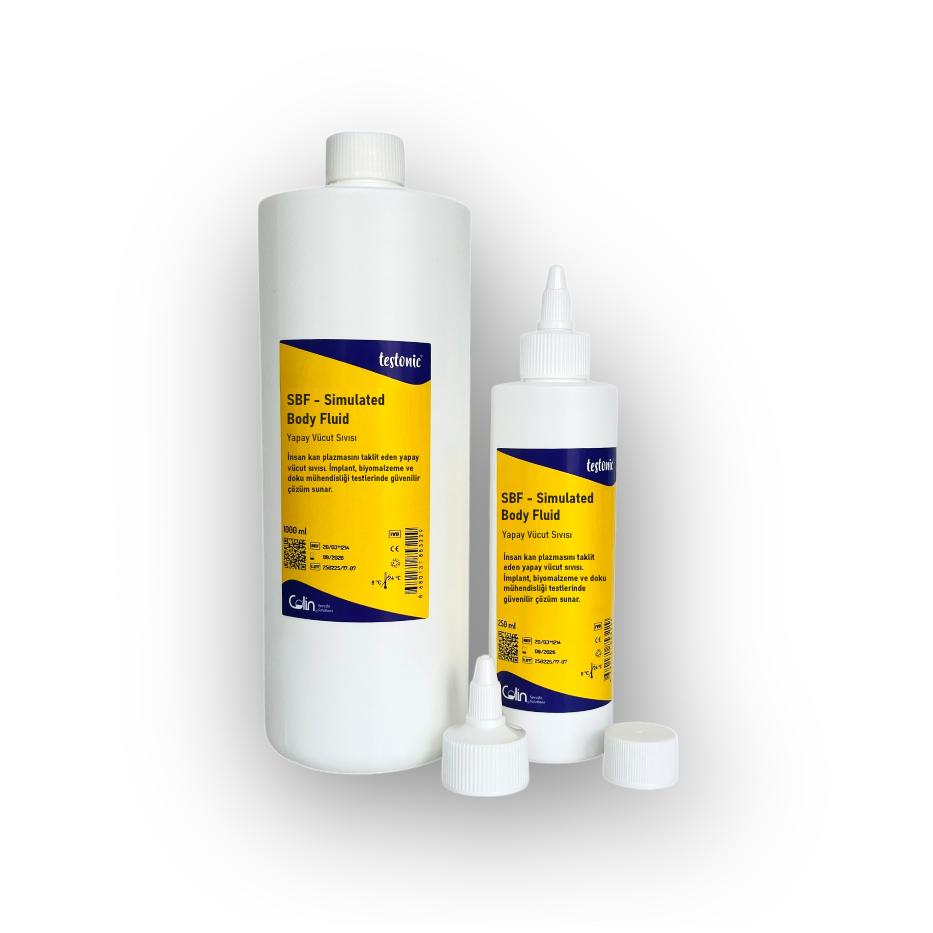
Simulated Body Fluid – SBF Classic (Kokubo Type)
(Simulated Body Fluid – SBF)
It is an artificial body fluid developed to mimic the ionic composition of human blood plasma. It provides a reliable and literature-compliant testing environment in biomaterial, implant, and tissue engineering studies.
Testonic® SBF Classic is a high-purity biomimetic test solution based on the classic SBF methodology defined by Tadashi Kokubo. The primary purpose of this solution is to simulate the in-body behavior of biomaterial surfaces in a laboratory setting.
Used at 37°C and pH 7.4, this buffered system is used in implant materials, bioceramics, and tissue engineering applications for controlled and provides a repeatable test environment.
Why SBF?
SBF solution is one of the most common methods used to predict how a material will behave in a biological environment.
In this environment:
-
Calcium and phosphate ions migrate from the solution to the surface
-
A layer of hydroxyapatite (Ca-P) forms on the surface
-
This formation increases the bone integration (osteointegration) potential of the material. It shows
Therefore, SBF testing is a critical preliminary analysis method in biocompatibility and bioactivity assessments.
Applications
1. Bioactive Material Tests
Hydroxyapatite formation on the surface of bioceramics, bioglasses, and advanced polymers is examined. This analysis shows the potential for interaction of the material with bone tissue.
2. Comparison of Implant Surface Modifications
Surface treatments (acid etching, anodizing, coating, etc.) applied to titanium, zirconia, and similar implant materials are compared in SBF medium.
3. Tissue Engineering and Scaffold Studies
The mineralization capacity of scaffold structures is evaluated. Material performance before cell culture is analyzed.
4. Surface Apatitization Studies
Ca-P crystals formed on the surface after long-term contact are observed.
This provides information about the implant's biological binding capability.
5. R&D and New Material Development
Used in the initial biological performance evaluations of dental products, bone grafts, and medical devices.
Who is it suitable for?
-
Biomaterial R&D laboratories
-
University research groups
-
Dental and orthopedic implant manufacturers
-
Medical device developers
-
Tissue engineering and cell culture laboratories
Technical Specifications
-
Formulation: Kokubo type classic SBF
-
Ionic composition: Na⁺, K⁺, Ca²⁺, Mg²⁺, Cl⁻, HCO₃⁻, HPO₄²⁻, SO₄²⁻
-
pH: 7.40 ± 0.05
-
Operating temperature: 36.5–37.0 °C
-
Buffer system: TRIS / HCl
-
CO₂ requirement: None
-
Composition: Inorganic simulation solution without protein and organic components
-
Sterility: Non-sterile (optionally filterable)
Packaging and Storage
-
250 mL and 1 L packaging options
-
Should be stored at 4°C in a dark environment
-
It is recommended to bring it to 37°C before use
Advantages
► The most commonly used SBF formulation in the literature
► Controlled, mimicking the ionic structure of human plasma Test Environment
► Cell-free, safe and practical to use
► Easily applicable and comparable results
► Time and cost advantage in biomaterial development processes
Results
It is a reliable test solution widely used in academic and industrial studies for evaluating biomaterial surface properties. It is used to examine osteointegration potential and analyze surface bioactivity.It is an ideal solution for researchers.
Technical Documents
Related Posts
Related News
Technical Support and Product Consulting
You can use the form to find the most suitable chemical solution for your needs or to obtain detailed information about the technical specifications of our products.
Your requests are carefully reviewed and answered by Colin's expert team.
You can ask us about the product.
