

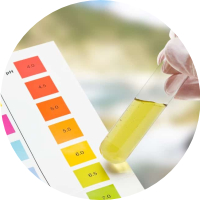
Testonic® Dialysis Water Test Kit is designed for routine monitoring of water treatment systems used in dialysis centers. Combining hardness, total chlorine, and pH testing in one set, it provides a practical solution for regular water quality checks.
The kit helps monitor changes in water softening, activated carbon filtration, and other treatment stages. Its easy-to-use tests allow trained technical personnel to perform on-site checks at designated sampling points.
Water Testing in 3 Simple Steps
- Collect a water sample from the designated sampling point for the selected parameter.
- Apply the appropriate test components according to the instructions.
- Evaluate and record the result with the date and sampling location.
Who Can Use It?
Dialysis centers, hospital dialysis units, biomedical and technical service personnel, quality control departments, and specialists responsible for dialysis water treatment systems.
Package Contents
- Hardness test components
- Total chlorine test components
- pH test components
- Parameter-specific instructions for use
Note: This kit is intended for routine on-site monitoring by trained personnel. It does not independently establish full chemical or microbiological compliance of dialysis water.
Dialysis Water Test Kit – Hardness, Total Chlorine and pH Monitoring
Testonic® Dialysis Water Test Kit combines three essential monitoring parameters for water preparation and treatment systems used in hemodialysis facilities: hardness, total chlorine, and pH.
Designed for routine on-site testing, the kit simplifies monitoring of water softening, activated carbon filtration, and other treatment stages. It enables trained personnel to perform regular checks at designated sampling points, compare results, and maintain monitoring records.
Three Essential Water Tests
1. Hardness Test
Measures general hardness associated with calcium and magnesium ions in water. It is particularly useful for monitoring water softener performance and identifying hardness breakthrough at the softener outlet.
2. Total Chlorine Test
Determines the combined amount of free and combined chlorine in water. Total chlorine is an important parameter for monitoring the chlorine and chloramine removal performance of activated carbon filters in dialysis water treatment systems.
3. pH Test
Indicates the acidic or alkaline character of water. It allows comparison of pH conditions in source water and designated stages of the treatment process.
Analytical Principle
The three tests use parameter-specific chemical reactions and result interpretation procedures.
- Hardness: Determination of calcium- and magnesium-related hardness using the appropriate reagent system.
- Total chlorine: Chemical testing for the combined determination of free and combined chlorine.
- pH: Evaluation of water acidity or alkalinity using an appropriate indicator system.
Measurement ranges, application steps, and result interpretation procedures are specified in the instructions supplied with each test.
Applications
- Hemodialysis centers and hospital dialysis units
- Dialysis water preparation and pretreatment systems
- Water softener performance monitoring
- Activated carbon filter chlorine removal monitoring
- Reverse osmosis pretreatment checks
- Routine technical maintenance and quality control
Testing in 3 Steps
Select the appropriate sampling point for the parameter and collect water according to the facility procedure.
Use the appropriate hardness, total chlorine, or pH test components according to their specific instructions.
Compare the result with the facility's acceptance criteria and record the date, time, and sampling location.
Technical Specifications
| Specification | Description |
|---|---|
| Product | Dialysis Water Test Kit |
| Product type | Multiparameter water monitoring kit |
| Measured parameters | Total hardness, total chlorine, and pH |
| Sample type | Water from designated sampling points in dialysis water preparation systems |
| Test method | Parameter-specific chemical testing procedures |
| Measurement ranges | According to the instructions for each individual test |
| Intended use | Routine on-site monitoring and process control |
| Target users | Trained dialysis facility and technical service personnel |
| Kit components | Hardness, total chlorine, and pH test components with instructions for use |
Parameters and Sampling Points
| Parameter | Monitoring Purpose | Example Sampling Point |
|---|---|---|
| Hardness | Water softener performance | Softener outlet |
| Total Chlorine | Chlorine and chloramine breakthrough monitoring | Carbon filter outlet or designated point between carbon beds |
| pH | Water characteristics and process changes | Source water or designated treatment points |
Note: Sampling locations and monitoring frequency must be established according to the treatment system design and the facility's approved procedures.
Result Interpretation
Each parameter must be evaluated according to its specific test instructions and the acceptance criteria established by the dialysis facility.
| Result Status | Interpretation and Action |
|---|---|
| Within acceptance criteria | Record the result and continue the routine monitoring program. |
| Deviation from expected values | Evaluate the relevant treatment stage and follow the facility's corrective action procedure. |
| Critical or questionable result | Apply the facility's emergency action procedure without delay and perform required verification testing. |
Recording results with the date, time, sampling location, and operator information facilitates long-term monitoring of water treatment performance.
Practical Testing Notes
- Use the correct sampling location for each parameter.
- Follow the facility's established sampling procedure.
- Use clean test tubes or suitable sample containers for each analysis.
- Follow the application sequence and reaction time specified for each test.
- Compare results with the facility's applicable monitoring limits.
- Follow approved action and verification procedures for questionable or critical results.
Important: This kit measures only hardness, total chlorine, and pH. Comprehensive dialysis water compliance requires additional chemical and microbiological testing as specified by applicable standards and facility procedures.
Frequently Asked Questions
Technical Documents
Related Posts
Related News
Technical Support and Product Consulting
You can use the form to find the most suitable chemical solution for your needs or to obtain detailed information about the technical specifications of our products.
Your requests are carefully reviewed and answered by Colin's expert team.
You can ask us about the product.